

Why Watching Baseball is Key for Development

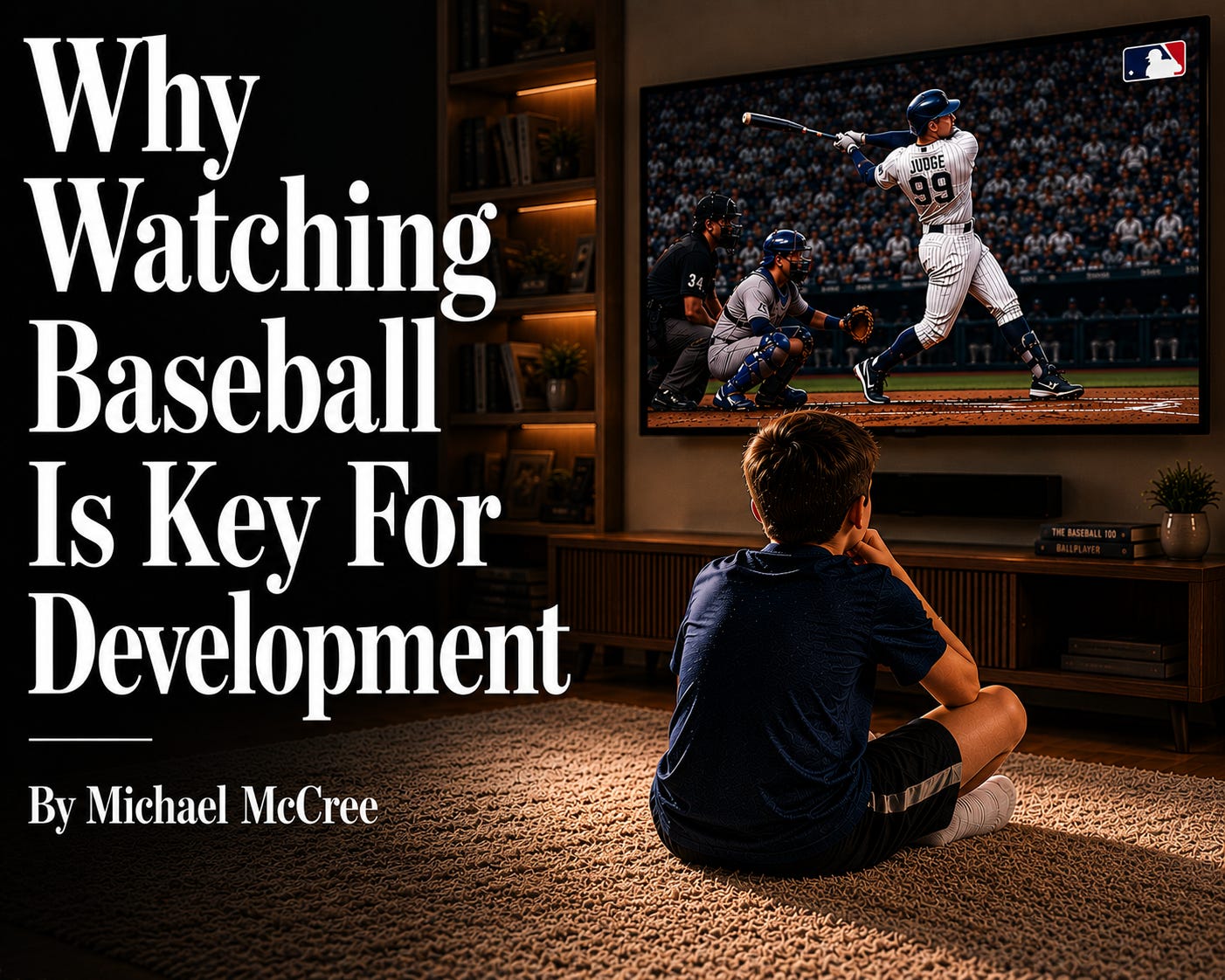
Before someone points it out, yes, there are plenty of good players who rarely watch baseball. This isn’t an argument that a kid can’t become a good player without watching the game.
The real question is whether watching baseball can help a player maximize their development.
That’s a much harder argument to dismiss.
One of the most underrated ways for a young baseball player to improve has nothing to do with private lessons, expensive travel teams, or fancy equipment.
It’s watching baseball.
A lot of young athletes today spend hours playing the game but very little time studying it. That makes more of a difference than people realize.
When kids don’t watch high-level baseball, the only version of the game they consistently see is the version being played by other kids their age. Their understanding of the game becomes limited to whatever faulty habits, mechanics, and decision-making exist in their immediate environment.
Baseball is a learned language.
Young athletes need opportunities to see what the game looks like when it is played correctly—by players who are stronger, smarter, more skilled, and more experienced.
When a child watches good baseball, they begin absorbing details without even realizing it:
• How infielders prepare before the pitch
• How outfielders take angles to the ball
• How pitchers control tempo
• How hitters adjust during an at-bat
• How catchers manage a game
• How players respond to failure (which sometimes is displayed well…other times, maybe not so much)
Those things may seem small, but they are the building blocks of baseball instincts.
Television gives young players access to teachers they may never meet in person.
The commentators alone can be incredibly valuable. Many broadcasters are former players or coaches who have spent decades around the game. They explain situations, strategy, mechanics, and decision-making in real time. A young athlete listening closely can learn the why behind baseball—not just the what.
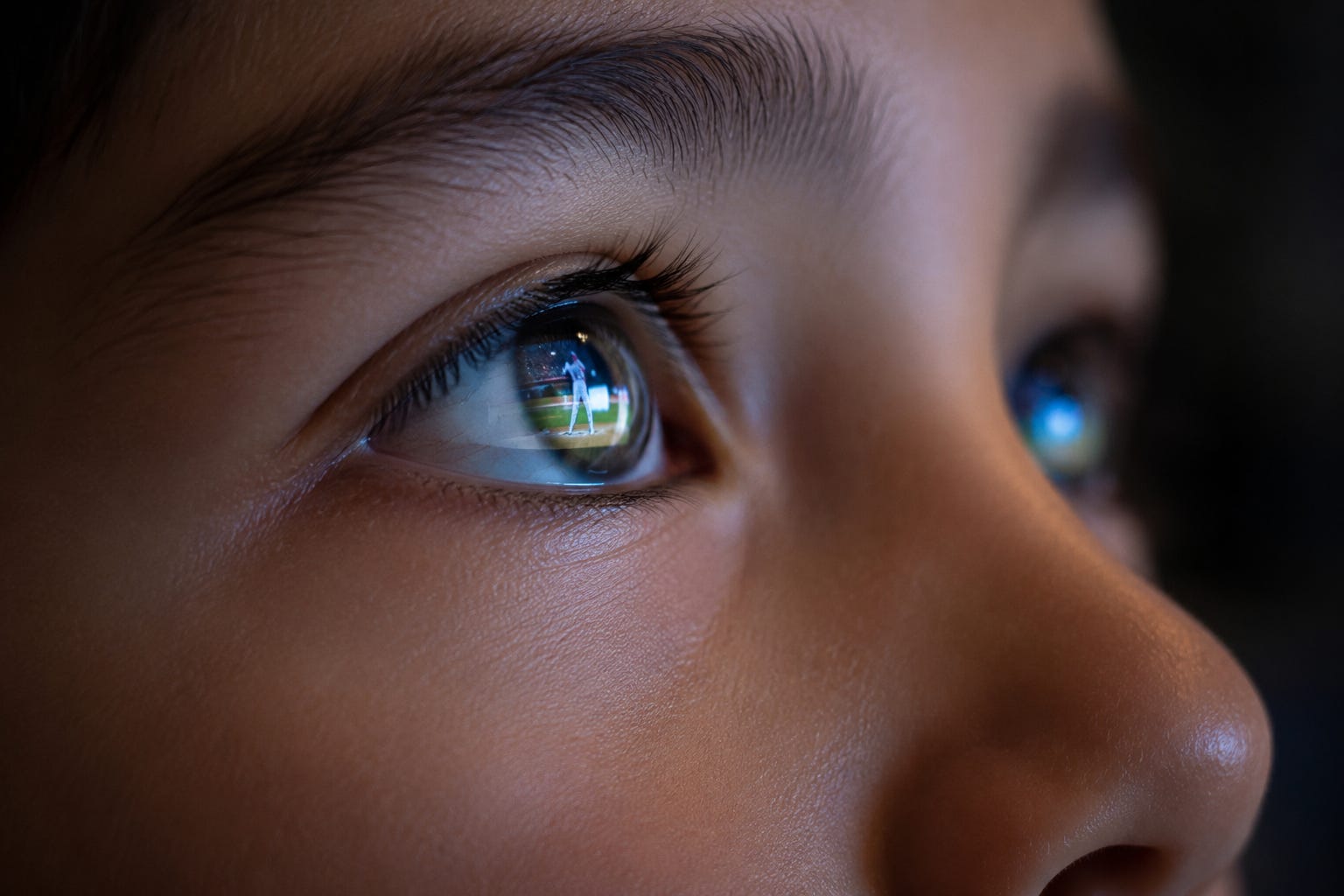
There is also science behind it.
The brain contains something called mirror neurons. These neurons activate not only when we perform an action ourselves, but also when we watch someone else perform it. In simple terms, the brain rehearses movements even while observing them.
When a young player watches a smooth swing, a clean throwing motion, or an infielder field a ground ball properly, the brain is quietly building a blueprint for those movements.
Kids naturally imitate what they repeatedly see.
That is why environment matters so much in development. And television can become part of that environment.
Of course, watching baseball is not a substitute for practice. No player becomes great by sitting on the couch all day.
The work still has to be done.
But watching the game sharpens instincts. It builds baseball IQ. It teaches rhythm, timing, awareness, and feel in ways that are difficult to teach during a two-hour practice.
The best young athletes usually immerse themselves in their sport.
They play it.
They talk about it.
They think about it.
And yes, they watch it.
Sometimes development starts on the living room floor, with a glove nearby and a baseball game on television.
By Michael McCree
Michael McCree (author of four books related to youth sports information for athletes and parents. You can find his works on Amazon)
Great article. Baseball is far more intricate than most people realize. The mental preparation changes with every pitch, every situation, and every position on the field. What looks simple from the stands is actually a constant series of calculations, adjustments, and decisions happening in real time.